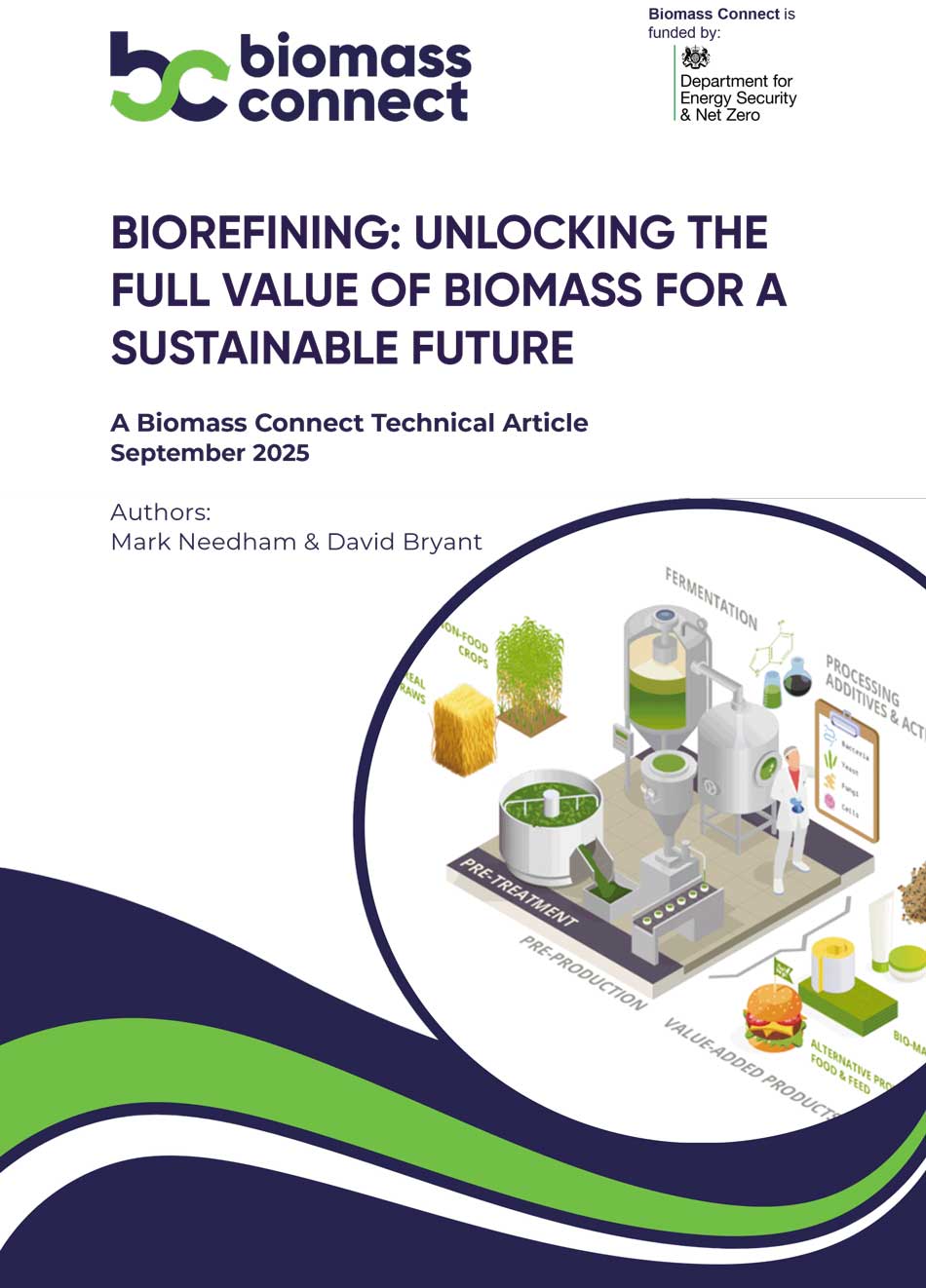
Biorefining: Unlocking the Full Value of Biomass for a Sustainable Future
Biorefining is at the heart of the circular bioeconomy, transforming renewable plant materials, known as biomass, into a wide range of valuable products. Much like a petroleum refinery, a biorefinery uses innovative processes to convert lignocellulosic biomass crops such as Miscanthus and Willow into fuels, chemicals, materials, and other products. This approach not only supports environmental goals, such as reducing carbon emissions, but also helps rural economies by creating new markets for farmers.
What is Biorefining?
Biorefining is the sustainable processing of biomass into a spectrum of marketable products, such as food, animal feed, chemicals, materials, and energy. By making use of all parts of the plant, biorefining maximises value and minimises waste.
Why Lignocellulosic Biomass?
Lignocellulosic biomass, found in non-edible parts of plants like stems and leaves, is especially valuable because it does not compete with food crops. It is composed of cellulose, hemicellulose, and lignin, components that can be separated and used for different purposes.
How Does Biorefining Work?
After harvesting, biomass crops undergo pretreatment processes such as steam explosion, which uses high-pressure steam to break down plant structures. This makes it easier to separate the plant into its main components: sugars, fibres, and other valuable molecules.
Conversion Pathways
- Enzymatic hydrolysis & fermentation: Converts plant sugars into bioethanol and other platform chemicals.
- Precision fermentation: Uses engineered microbial systems to convert pentose and hexose sugars to produce larger quantities of higher-value products
- Anaerobic digestion: Produces biogas for renewable energy.
- Thermochemical conversion (pyrolysis, gasification): Processes ‘leftover fibres’ into biochar or syngas.
Fibres: More Than Just Waste
A major output of biorefining (Figure 1) is the fibre fraction left after extracting sugars. Researchers across the globe, including those at one of the biomass hub site collaborators, at IBERS (Aberystwyth university) have been working with this fibre fraction, which is rich in cellulose and lignin. These fibres have many uses:
- Animal nutrition and bedding: Fibre residues can be used as livestock bedding or upgraded for animal feed, especially with microbial treatments to improve digestibility.
- Biomaterials: Processed fibres can become composites, biodegradable packaging, or paper-like materials.
- Soil amendments: Lignin-rich fibres help build soil carbon and improve soil health.
- Biochar: Pyrolysis locks carbon into a stable form, which can be useful for soil improvement and long-term carbon storage.
These pathways ensure that every part of the crop is used, supporting both economic and environmental sustainability.

Figure 1: Biomass crop biorefining valorisation potential.
Case Study: Miscanthus – A Crop for a Bio-Based Future
Miscanthus × giganteus is a high-yielding perennial grass (see more crop info here) that is a focus of biorefining research. Its high cellulose and hemicellulose content make it ideal for extracting fermentable sugars and other components, while its fibrous leftovers offer potential for providing renewable energy.
Step 1: Pretreatment and Sugar Recovery
Researchers employ combined methods, such as steam explosion and ionic liquids, to break down the rigid structure of Miscanthus. This separates the plant into:
• Cellulose: Can then be enzymatically hydrolysed into glucose for the food and fermentation industries.
• Hemicellulose: Is converted into xylose that can be fermented through to the natural sweetener xylitol, or xylo-oligosaccharides (XOS), which are prebiotics that promote gut health when used in food and animal feed.
Step 2: Valorising the Residual Fibre
After sugar extraction, the remaining fibre still holds energy potential. It can be used as a renewable fuel for power stations or converted into biochar. One promising use is in decarbonising steel production; replacing some coal with Miscanthus-derived fibre can reduce carbon emissions, particularly in industrial applications where fossil carbon reduction is critical.
One promising avenue is its use in decarbonising steel production. Traditional steelmaking relies heavily on coal and coke, which are significant sources of CO₂ emissions. By replacing a portion of this fossil fuel input with biomass-derived fibre from Miscanthus that has been upgraded, steel plants could significantly reduce their carbon footprint and improve process economics by valorising the side streams to produce xylitol and or XOS prebiotics.
A promising application lies in the decarbonisation of steel production. Conventional steelmaking is heavily reliant on coal and coke, which are major contributors to CO₂ emissions. By partially substituting these fossil inputs with upgraded biomass-derived fibre from Miscanthus, steel plants can substantially lower their carbon footprint. Additionally, valorising process side streams to produce high-value co-products such as xylitol and/or XOS prebiotics could enhance overall process economics.

Figure 2. Demonstrating the potential routes and draft figures relating to biomass biorefinery outputs (in this example, Miscanthus)
Biorefining, Net Zero, and the Food vs Fuel Debate
Biorefining supports the UK’s Net Zero strategy, particularly when crops are grown on marginal land. By using non-food biomass, biorefining avoids competition with food production—a key concern in the food vs fuel debate.
To find out more about the range of other biomass crops that could feed into similar systems, click here.
Latest Technical Articles