In early June, larvae of the Tasmanian Eucalyptus Beetle (P. selmani) were detected at the BGI site in Buckinghamshire. The outbreak was widespread, affecting both ends of the 10-year-old Eucalyptus plot. During discussions at our Royal Forestry Society meeting in Northern Ireland (see more on this here), it was suggested that these beetles are spreading across the Republic of Ireland and moving northward.
Native to Tasmania and first recorded in Ireland in 2007, P. selmani is an invasive leaf beetle that has established itself in parts of Ireland and southern England. Both the adults and larvae can cause significant leaf damage to Eucalyptus trees, reducing stand productivity and growth. Under suitable conditions, a single female can lay around 11 eggs per day making it a successful invasive pest species.
While no beetles have yet been observed at our other sites across the UK, adult beetles are winged and capable of dispersing both by flight and through accidental human-assisted transport. On a positive note, their colourful appearance makes them relatively easy to spot—see images from the BGI site for reference.
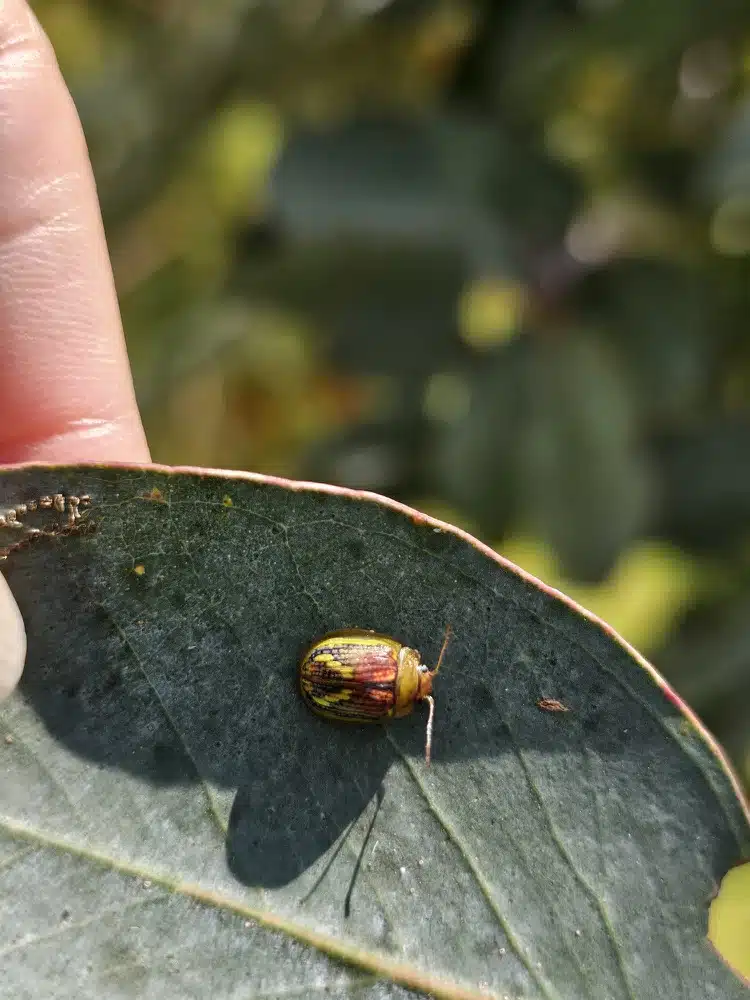

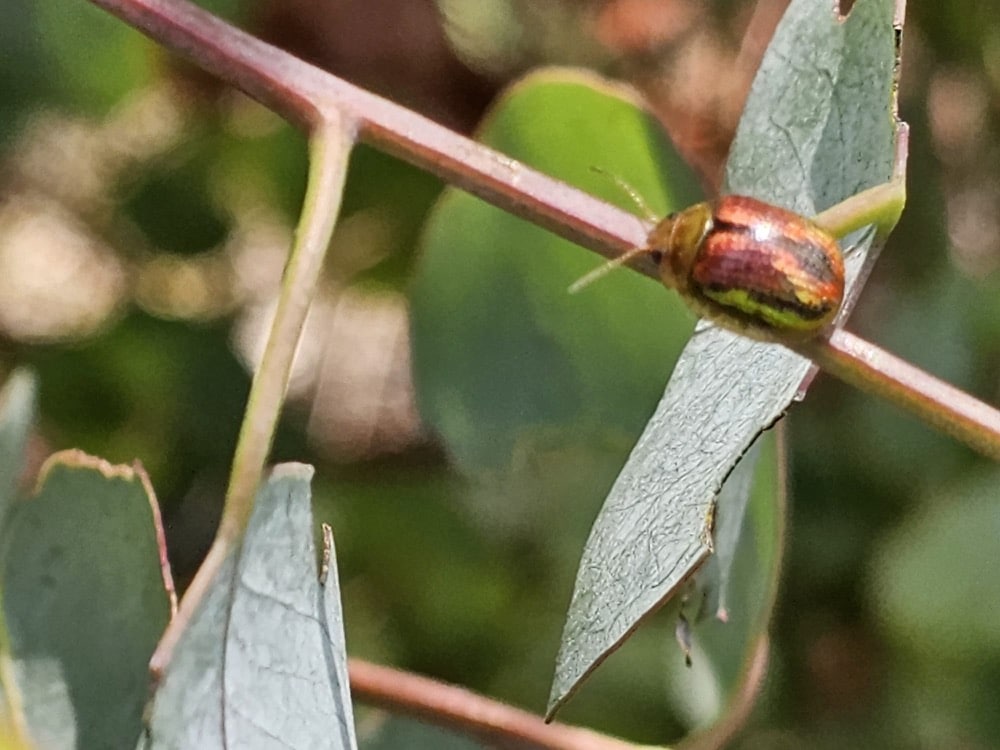
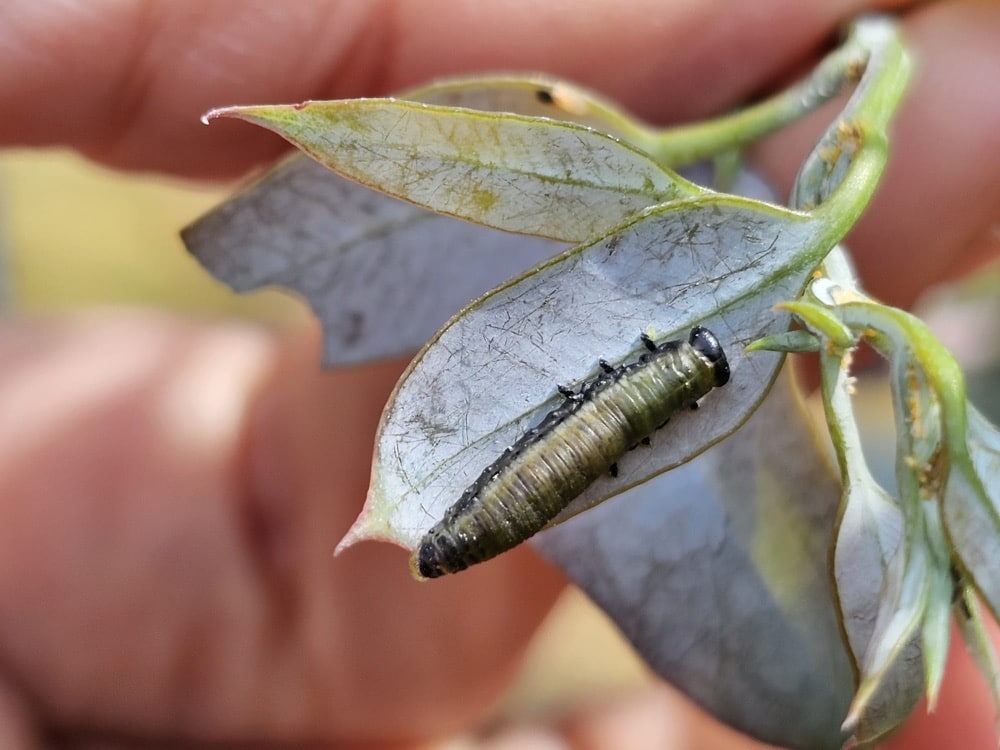
For those transitioning into biomass crops from other sectors, it’s essential to understand your responsibility to report certain crop pests to the Animal and Plant Health Agency (APHA).
Following the recent detection of the Beetle at our Buckinghamshire site, the Biomass Connect team took the following steps:
- APHA was notified and visited the site on 26th June 2025 to collect samples for formal diagnosis.
- A Plant Health Form was submitted, and all relevant plant passport documentation was provided to the authorities.
- The site team reported that this level of damage has not been observed in previous years and is now under close, ongoing monitoring.
We will continue to observe the site for any ongoing or secondary impacts of this pest. Any significant findings will be included in any growth analysis reports we produce, helping us assess the full extent of the outbreak’s effects. This will also allow us to provide informed guidance to others across the UK who may face similar threats.
For more information on the pest, please refer to the official DEFRA factsheet here.