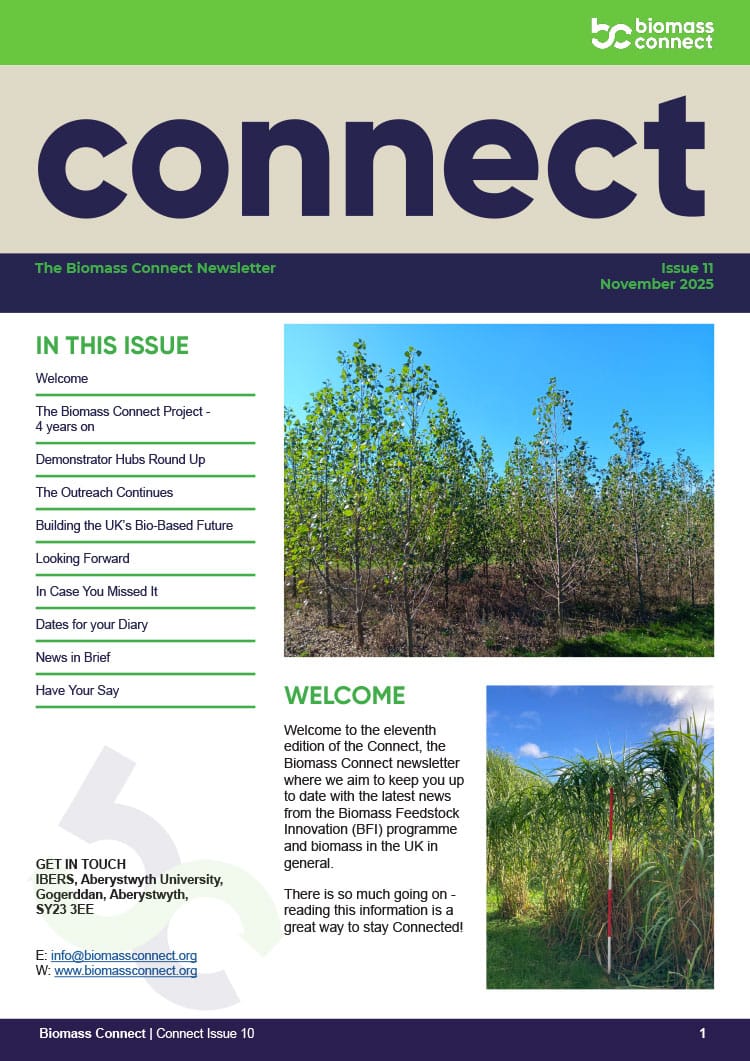
The Forestry Commission has published a comprehensive new guidance document entitled “Protecting trees from mammal damage: technical guidance” (30 October) aimed at supporting landowners, woodland managers and advisers who are establishing new tree plantations or agro-forestry systems.
This has direct relevance for fast-growing woody biomass species and perennial energy crops, especially during the critical planning and establishment phases.
Why it matters for biomass/energy-crop schemes
The guidance signals that mammals, both wild and domestic, continue to pose a significant risk to young trees and planted stems. The document emphasises that while mammals contribute positively to healthy ecosystems, they may also harm trees and hamper establishment, growth, yield and structural resilience
For biomass crop plantations, early establishment losses or growth suppression can reduce profitability, delay harvest cycles and increase costs. Thus, incorporating mammal-damage risk assessment and mitigation into the planning phase is prudent.
What the guidance covers
 The guide helps “identify mammal species that can damage trees, understand their impact and find practical ways to protect our treescapes.”
- It lists 23 mammal species across eight groups in England (beaver, grey squirrel, small rodents, rabbits/hares, deer, pigs/wild boar, livestock & bison, horses/ponies) that may affect trees.
- It details three broad methods for protection:
- Managing mammal populations (e.g., natural predation, population control)
- Modifying mammal access to trees (e.g., fencing, tree guards, deterrents)
- Managing trees / woodland in the landscape (e.g., species diversity, stand design, planting density)

Key considerations for biomass site and crop planners
- Risk assessment early in design – Before planting (or establishment of a new energy-crop), walk the site boundary, inspect for signs of mammals (droppings, tracks, evidence of browsing/rubbing) and assess the potential for damage.
- Match protection to species, site and mammal pressure – For example:
- For small rodents/voles (which may gnaw at the base of young stems) you may need small-mesh guards or ground-level barriers.
- For deer or large herbivores (which browse high, strip bark or fray trunks) you may require taller fencing, tree shelters or whole-plot exclusion. The guidance contains links to detailed templates for all aspects of deer management.
- Consider species choice and stand design – Selecting species and varieties adapted to the site conditions will reduce stress and vulnerability. The design of the plantation (layout, access routes, margins, companion vegetation) affects access and vulnerability to mammals.
- Budget for protection and maintenance – Protection measures (fencing, shelters, guards) add cost; but they may avoid far higher losses in yield or survival. Maintenance matters: fences, shelters and guards need inspection, repair or removal once trees are established.
- Integration into project business case – For biomass/energy crop projects, losses in early years may impact the return on investment. Including the cost of mammal‐proofing and maintenance in the economic model is wise.
- Monitoring & adaptivity – Post-planting inspections for damage and corrective action if required are recommended.
Implications for fast-growing woody crops and perennial energy systems
Since many energy-crop plantings involve monocultures, often adjacent to open land or woodland edges (where mammals may frequent), vulnerability is high. For example, young stems may be more susceptible to bark-stripping, browsing or uprooting. By integrating the guidance at the planting design stage, scheme owners can:
- Improve tree survival rates and early growth rates (which affects biomass yield).
- Reduce replanting and maintenance costs triggered early on by mammal damage.
- Help ensure the long-term resilience of the stand by avoiding structural weakness introduced by damage (for example wind‐snap due to bark stripping).
- Enhance likelihood of meeting funding/grant criteria, where protective measures may be required or expected by funders.
Conclusion
As plantations of fast-growing woody species and perennial energy crops continue to play a vital role in the UK’s move toward low-carbon bioenergy, anticipatory protection measures against mammal damage are needed. The new guidance from the Forestry Commission provides a timely and practical resource. For biomass-sector practitioners, embedding mammal-risk assessment and protection into the planning and establishment phases will enhance both resilience and returns.
Access the full guidance here: https://www.gov.uk/guidance/protecting-trees-from-mammal-damage-technical-guidance